
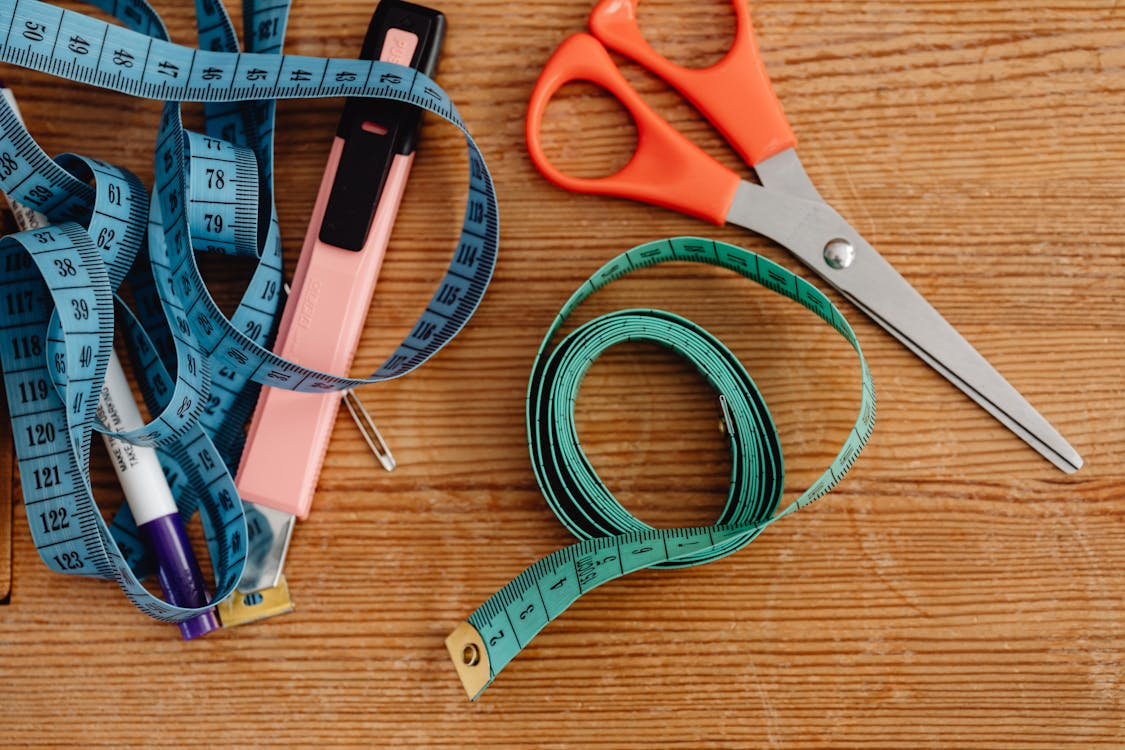
From simple tools to household essentials, everyday objects that haven’t changed demonstrate an important principle of design: sometimes the best solution is the one that does not need improvement.
In a world filled with constant upgrades, redesigns, and technological breakthroughs, it is easy to assume that everything must evolve to stay relevant. Yet some everyday objects have remained remarkably unchanged for decades. Their designs have survived not because innovation ignored them, but because they already perform their jobs exceptionally well.
When Good Design Stands the Test of Time
Many products undergo frequent redesigns because technology, materials, or consumer preferences change. However, some objects reach a point where major changes offer little practical benefit.
Take the paper clip, for example. Its familiar shape has remained largely unchanged for generations because it efficiently performs a simple task. Numerous alternatives have been proposed, yet the classic design remains the most widely used.
The same principle applies to many other everyday items. When a design is inexpensive, reliable, easy to manufacture, and effective, there is little incentive to replace it.
Good design often survives because it balances simplicity and functionality better than newer alternatives.
See Simple Inventions That Changed Everything for more lasting design.
Tools That Got It Right the First Time
Some of the longest-lasting designs can be found among basic hand tools.
Hammers, screwdrivers, measuring tapes, and wrenches have certainly benefited from improvements in materials and ergonomics, but their fundamental forms remain familiar across generations. A carpenter from decades ago would immediately recognize the tools used today.
The reason is straightforward. The physical tasks these tools perform have not changed significantly. A hammer still drives nails. A screwdriver still turns screws.
While manufacturers continue refining details, the core designs remain remarkably consistent because they effectively solve enduring problems.
Check Products Invented Completely by Accident for more design backstories.
Household Items That Refuse to Become Obsolete
Many household objects have also resisted major redesign.
Scissors, clothespins, ladders, and kitchen whisks are some of the everyday objects that haven’t changed much in decades. Although materials may have improved, the overall concepts remain virtually identical.
This durability reflects the fact that these products perform straightforward functions. There is only so much innovation required when the original solution works well.
In some cases, attempts to reinvent these objects have actually reinforced appreciation for the traditional versions. Consumers often return to familiar designs because they are reliable, affordable, and easy to use.
Explore The Surprising History of Common Household Items for related everyday objects.
Why Simplicity Often Wins
One reason certain objects remain unchanged is that simplicity has advantages.
Complex products can introduce additional points of failure. Extra features may increase cost without improving performance. Simple designs, by contrast, are often easier to maintain, manufacture, and understand.
This principle explains why many classic products continue to compete successfully against newer alternatives. Consumers frequently prefer items that perform one task exceptionally well rather than products loaded with unnecessary features.
The enduring popularity of many everyday objects suggests that innovation is not always about adding more. Sometimes it is about preserving what already works.
See Why Some Brands Became Household Names for insight into product staying power.
Lessons From Designs That Endure
The objects that have remained unchanged for decades teach valuable lessons about creativity and problem-solving.
Their longevity demonstrates that innovation is not merely the pursuit of novelty. True innovation often produces solutions so effective that they remain useful for generations. A well-designed object can outlast countless trends and technological shifts.
These products also remind us that progress is not always visible. Materials may improve. Manufacturing processes may become more efficient. Yet the outward appearance remains familiar because the original concept was fundamentally sound.
The next time you use a paper clip, pair of scissors, hammer, or measuring tape, consider how little those designs have changed over the years. In a world that constantly celebrates the newest thing, these enduring objects offer a different kind of success story.
They prove that when a design solves a problem elegantly and effectively, it may not need reinvention at all. Sometimes the greatest achievement is creating something so useful that generations continue using it exactly as intended.